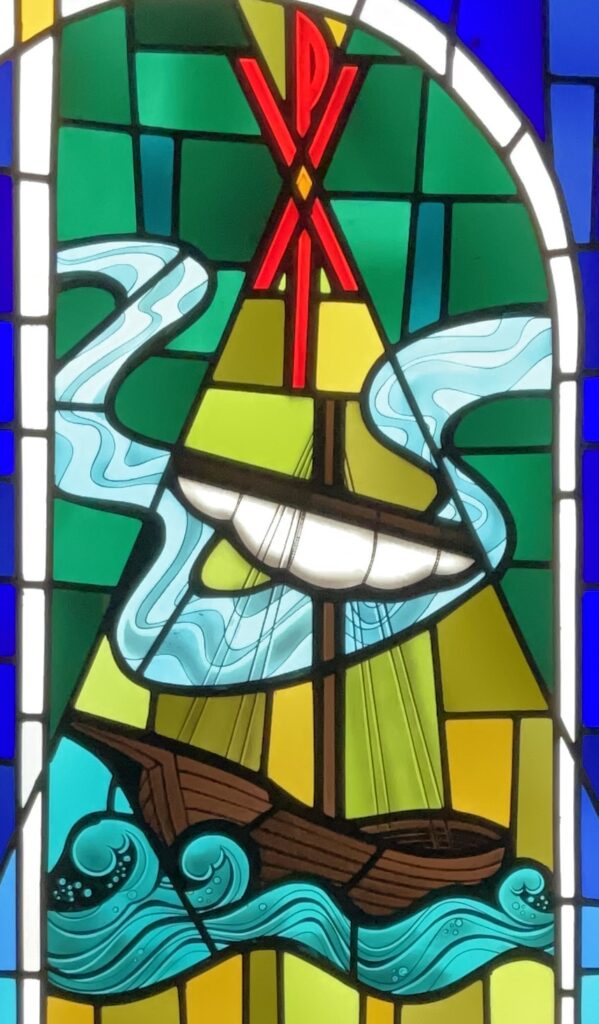
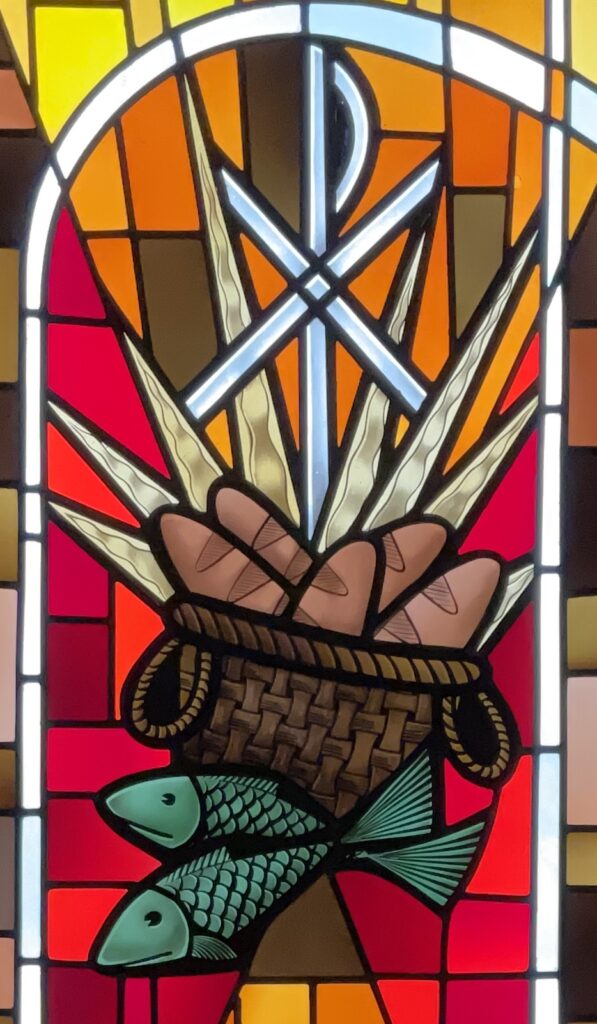
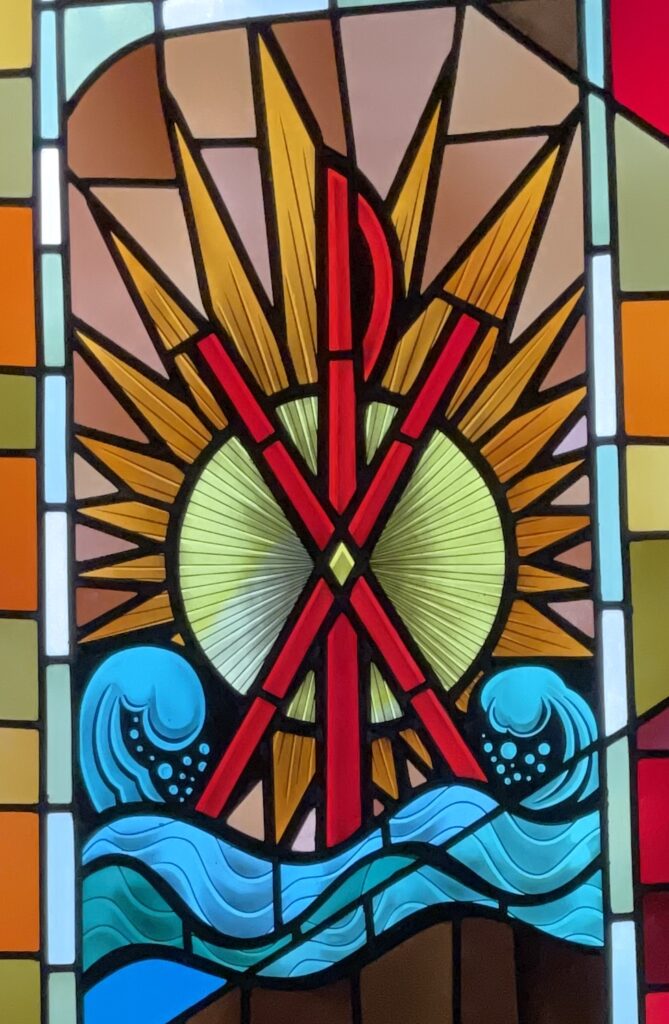
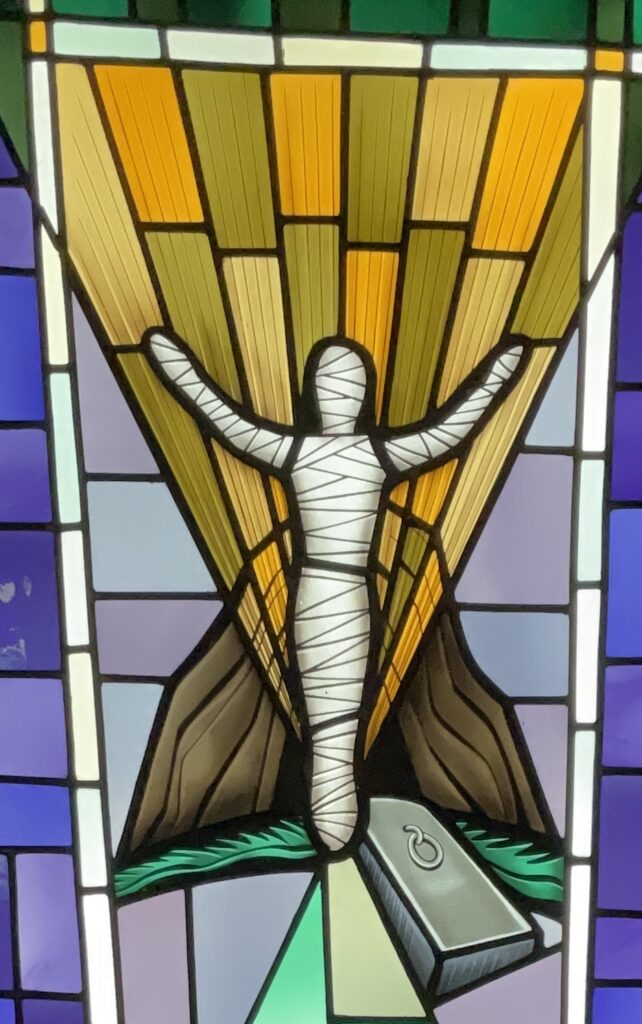
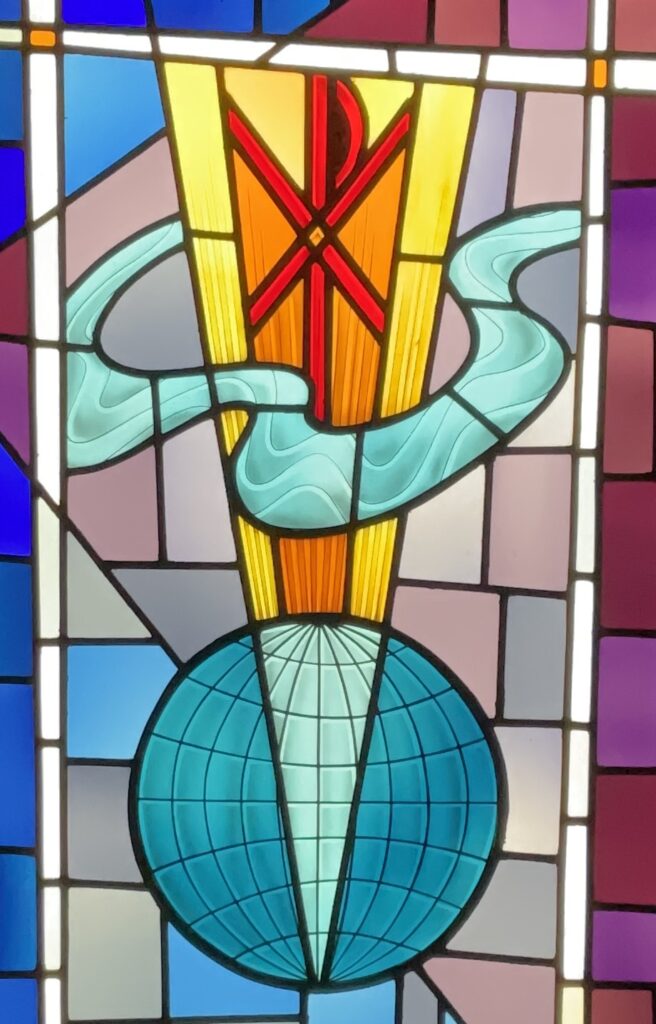
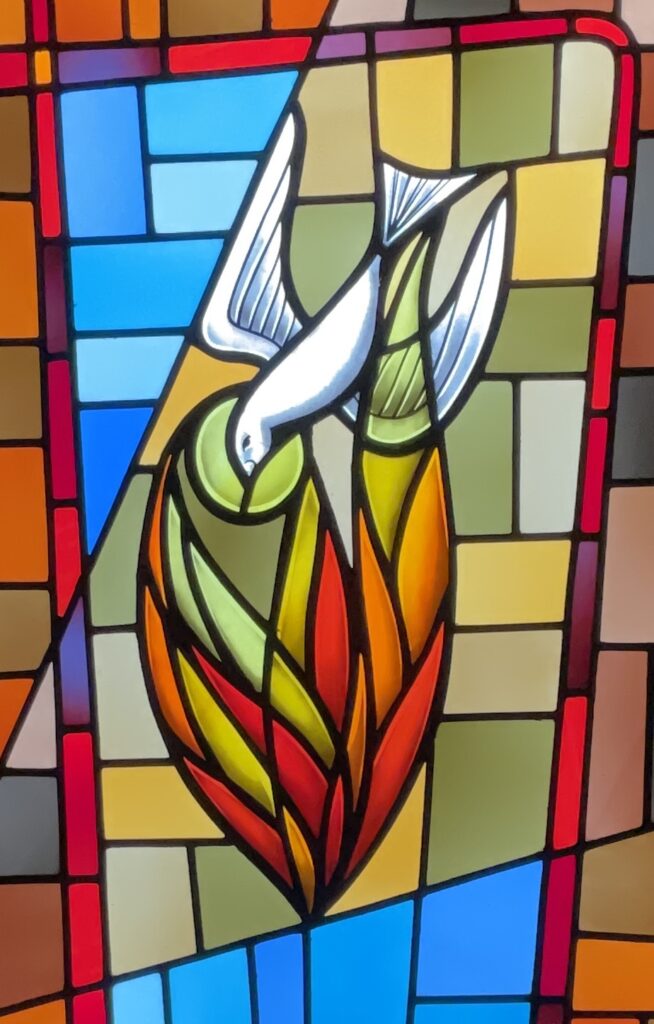
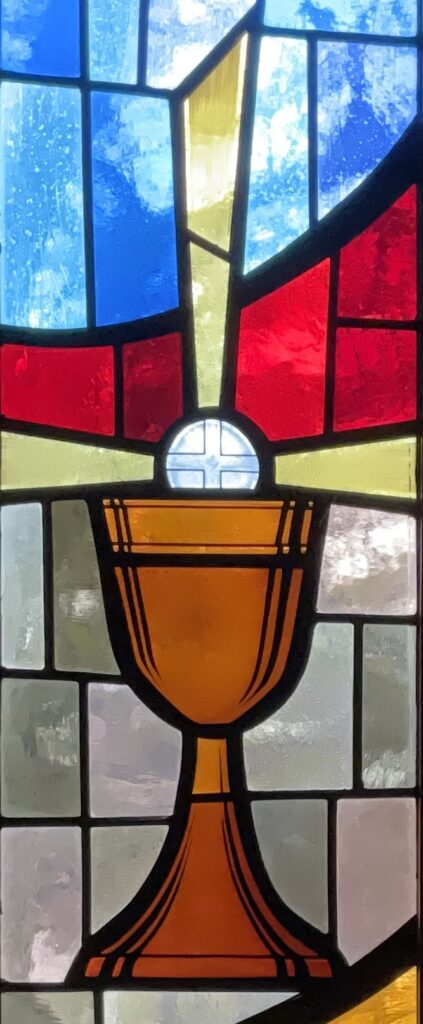
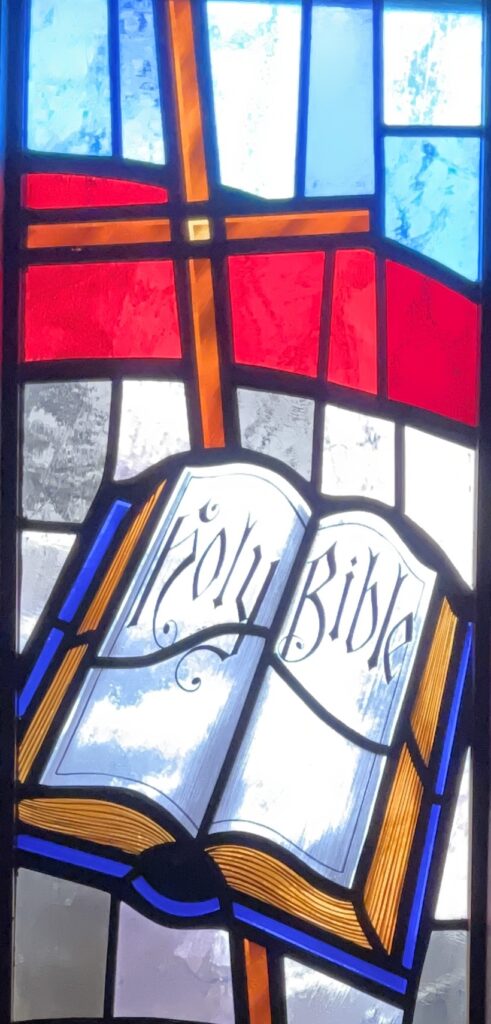
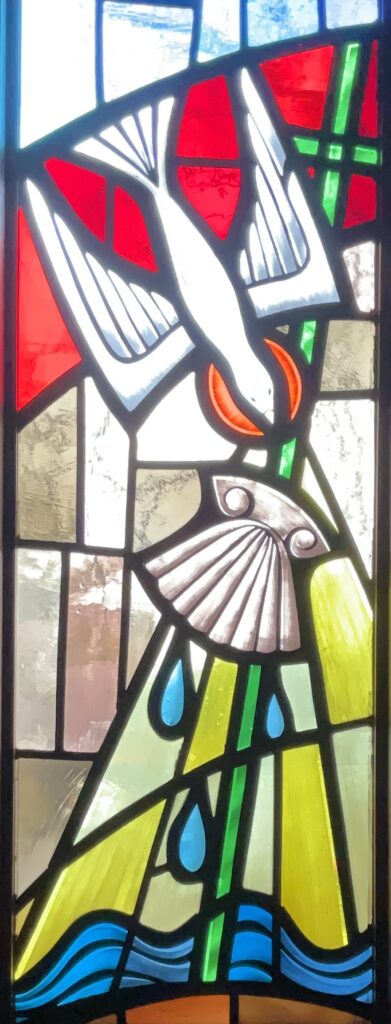
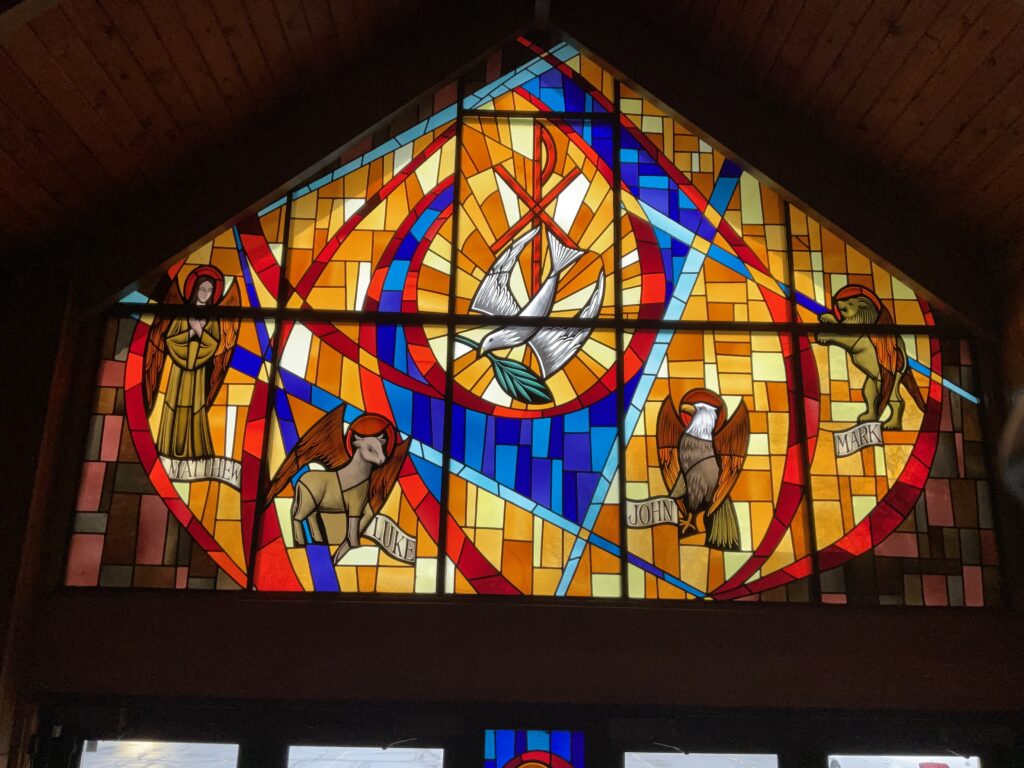
Here at Peace Lutheran Church we are blessed to have many pieces of artwork to teach us about Jesus. These images assist us in receiving of God’s Word.

The first window shows us the birth of Jesus. Jesus was laid in a manger. Instead of a baby the artist used the ChiRoh is the combination of the first two Greek letters in the word for Christ. The star led the wise men to Jesus.
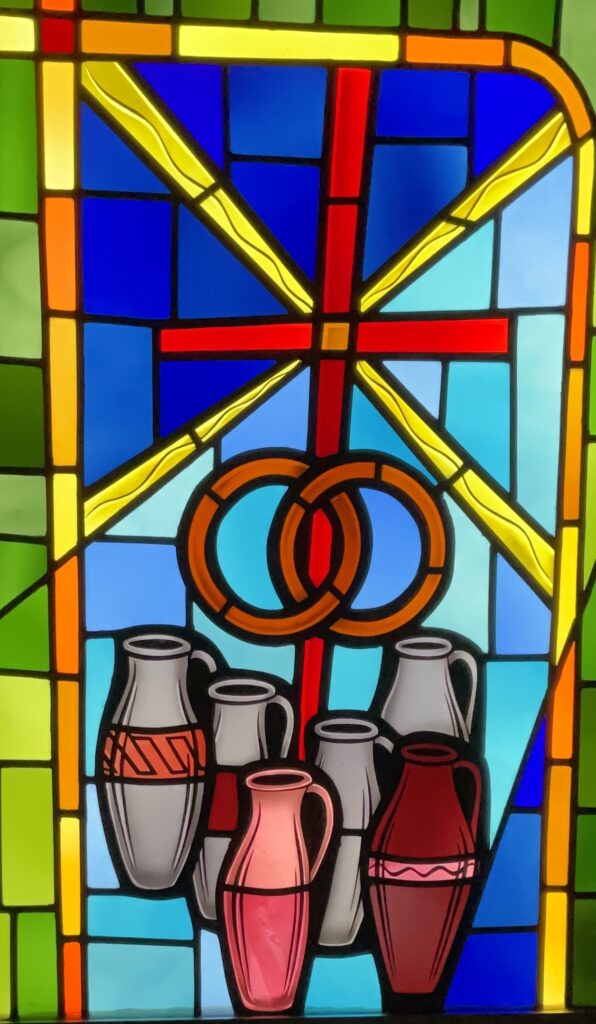
The Wedding at Cana, where Jesus show His first sign as the Son of God
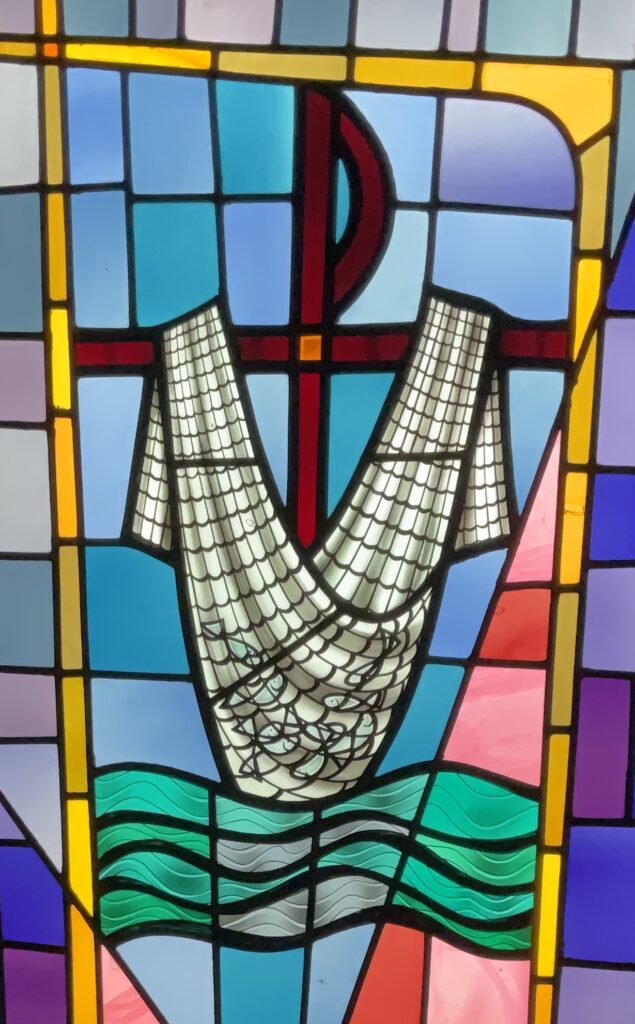
If you look carefully at this stain glass, you will notice that the fish have smiles on their face. This means that they are happy. The fish I have ever seen caught are never smiling. Even those I have seen in aquariums don’t seem to be smiling at me. Why would the fish be smiling? Consider Jesus’ parable:
Matthew 13:47–50 (ESV) 47 “Again, the kingdom of heaven is like a net that was thrown into the sea and gathered fish of every kind. 48 When it was full, men drew it ashore and sat down and sorted the good into containers but threw away the bad. 49 So it will be at the end of the age. The angels will come out and separate the evil from the righteous 50 and throw them into the fiery furnace. In that place there will be weeping and gnashing of teeth.
The Smiling fish would be the ones that believe in Jesus Christ. Notice the net draping the cross. Just like in the sanctuary at this time of the church year having the cross, draped with a white cloth. White the color of season for Easter. Same concept, the net is draped as the victory of the Easter celebration, for the fish, representing people in the parable are collected and save only through the cross of Jesus.
Why would we be smiling in our daily lives? We understand that we are save by Jesus’ death and just as Jesus was raised from the dead so are we. Even though we face many difficulties in this world, we also can keep on smiling, because we know that in the end we will be with Christ in heaven above. The fish out of water know that they are going to die. Why would they be smiling because of the net is on the cross. St. Paul reminds us that: Romans 8:38–39 (ESV) 38 For I am sure that neither death nor life, nor angels nor rulers, nor things present nor things to come, nor powers, 39 nor height nor depth, nor anything else in all creation, will be able to separate us from the love of God in Christ Jesus our Lord.
There may be some who think that this is about Jesus calling us to be fishers of men. Matthew 4:19 (ESV) 19 And he said to them, “Follow me, and I will make you fishers of men.”
But as we look at the stain glass we realize that they are all about the person and work of Jesus. So like everything we do here at Peace Lutheran Church, it is always all about Jesus. This is why we can smile.